Buying a Used Car from a Private Seller: A Complete Guide
The Savings Are Real, and So Is the Responsibility
Private-party used cars are often meaningfully cheaper than the same vehicle at a dealership, since there’s no dealership overhead or resale margin built into the price. That savings comes with a tradeoff: there’s generally no warranty, no formal recourse, and no reconditioning process behind the car. Everything that a dealer’s systems would normally catch becomes your responsibility to verify yourself.
This isn’t a reason to avoid private sales – millions happen safely and successfully every year. It’s a reason to approach them methodically, which is exactly what this guide walks through.
Table of Contents
- Why Private Sales Are Often Cheaper
- Finding Legitimate Private Listings
- What to Ask Before You Even Meet
- Meeting Safely for a Viewing and Test Drive
- Verifying the Seller and the Title
- Negotiating With a Private Seller
- Safe Payment Methods
- Closing the Deal and Transferring Title
- Expert Tips
- Common Mistakes
- Frequently Asked Questions
Why Private Sales Are Often Cheaper
A private seller doesn’t need to cover dealership overhead, reconditioning labor, or a resale margin, which typically translates into a lower asking price for a comparable vehicle. The tradeoff is that you’re generally buying as-is, with no warranty and limited ability to resolve issues that surface after the sale, which is exactly why the verification steps before you pay matter so much more in a private transaction.
Finding Legitimate Private Listings
Platforms built specifically around vehicle sales tend to attract more serious sellers and give you more structured information upfront than general classifieds. Browsing private seller listings alongside dealer inventory in one place makes it easier to compare pricing and spot listings with complete, credible information versus vague or inconsistent ones.
What to Ask Before You Even Meet
A short message exchange before arranging a viewing saves everyone time. Ask why they’re selling, how long they’ve owned the car, whether it’s been in any accidents, whether there’s a lien on the title, and whether they have maintenance records available. Specific, prompt answers are generally a good sign; vague or evasive responses are worth taking seriously as a caution flag before you invest time in a meeting.
Meeting Safely for a Viewing and Test Drive
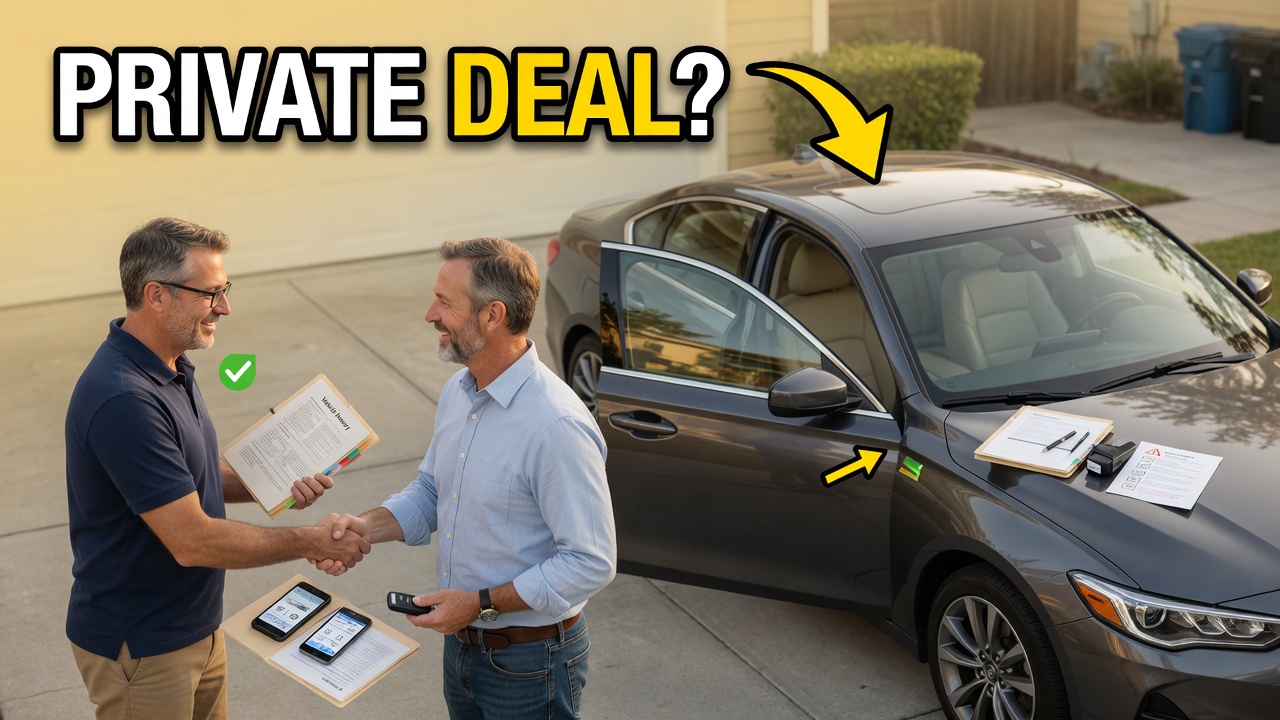
Choose a public, well-lit location for the initial meeting – a busy parking lot or, where available, a police station’s designated exchange zone. Bring a friend if possible, and always ride along on the test drive. It’s reasonable to ask to see the seller’s driver’s license before the test drive begins, and most legitimate sellers won’t object to this.
Verifying the Seller and the Title
Confirm that the name on the title matches the seller’s government-issued ID. If it doesn’t – say, the seller explains they’re selling on behalf of a family member – ask for documentation establishing that relationship and authority to sell, or treat this as a reason for added caution. Check the VIN on the title against the VIN on the dashboard and door jamb; any mismatch should stop the transaction until fully explained.
Pull an independent vehicle history report using the VIN yourself rather than relying solely on one the seller provides, and schedule a pre-purchase inspection with a mechanic who has no relationship to the seller.
Negotiating With a Private Seller
Private sellers are often more flexible on price than a dealership, particularly if they’re motivated to sell quickly, but they may also be more emotionally attached to the car and its asking price than a business would be. Lead with specific, documented reasons for any price adjustment – inspection findings, comparable local sales – rather than a vague request for a lower number, since specifics tend to land better with individual sellers.
Safe Payment Methods
Never accept or offer a personal check for the full amount without allowing it to genuinely clear first. A cashier’s check verified directly with the issuing bank, or a fully and irreversibly cleared digital transfer, are generally the safest options for both sides of a private transaction. Avoid any payment method that either party can reverse or dispute after the vehicle has already changed hands.
Closing the Deal and Transferring Title
Complete a bill of sale documenting the date, price, and both parties’ information, and ensure the title is properly signed over according to your local requirements. If the seller still owes money on the car, coordinate the loan payoff and lien release before finalizing payment, often by meeting at the seller’s bank or credit union to handle it in one visit. Once everything is signed and payment has cleared, promptly begin your own registration and insurance process.
Expert Tips
- Text or message conversations with the seller before meeting create a useful record if any dispute arises later.
- Reverse image search listing photos to check they’re not reused from another listing elsewhere.
- Bring a printed bill of sale template with you so you’re not scrambling to write one up on the spot.
- If a deal feels rushed or overly convenient, slow down rather than speed up – urgency is a common pressure tactic.
Common Mistakes
- Skipping the independent inspection because the seller seems trustworthy in conversation.
- Accepting a personal check without confirming it has genuinely cleared.
- Not verifying the seller’s ID matches the title before proceeding with the sale.
- Meeting in an unsafe or isolated location for the initial viewing or test drive.
- Failing to complete a bill of sale, leaving no documented record of the transaction terms.
Frequently Asked Questions
Is it safe to buy a car from a private seller?
Generally yes, provided you follow standard verification steps: meeting safely, checking the title and ID, getting an independent inspection, and using a verified payment method.
Do private sellers offer any warranty?
Typically no. Private sales are usually as-is, which is why thorough inspection and verification before payment matter so much more than in a dealer transaction.
What if the seller still owes money on the car?
The sale needs to be structured so the existing loan is paid off and the lien released, often by meeting at the seller’s bank or credit union to handle it directly.
How do I verify a private seller is the legitimate owner?
Check that the name on the title matches their government-issued ID, and confirm the VIN matches across the title, dashboard, and door jamb.
What’s the safest way to pay a private seller?
A cashier’s check verified directly with the issuing bank, or a digital transfer confirmed as fully and irreversibly cleared, are generally the safest options.
Should I still get an inspection if the seller says the car is in great shape?
Yes, always. An independent inspection is one of the few protections you have in a private sale, regardless of how trustworthy the seller seems.
Can I negotiate price with a private seller?
Usually yes, and specific, documented reasons – like inspection findings – tend to be more persuasive than a general request for a discount.
What documents do I need from a private seller?
The signed title, a completed bill of sale, and ideally maintenance records, though exact requirements for registration vary by region.
Is it normal to bring someone else to a private car viewing?
Yes, and it’s a good safety practice. Bringing a friend or family member is common and reasonable for both buyers and sellers.
What should I do if something feels off during a private sale?
Trust that instinct. It’s completely reasonable to end the interaction or walk away from a deal that doesn’t feel right, regardless of how far along the conversation has gotten.
Summary
Private sales can offer real savings, but the safety net a dealer provides doesn’t exist here – it’s replaced by your own verification process. Meeting safely, confirming title and identity, getting an independent inspection, and using a verified payment method covers the vast majority of what can go wrong.
Final Thoughts
A private sale done carefully is often the best value in the used car market. The key word is carefully – the savings only make sense if you’ve done the verification work a dealer would normally have handled for you.
Ready to find a private-seller deal? Browse used car listings on Car Hub, or create a free account to message sellers directly.