The Future of Car Ownership: What Buyers Should Know
Quick Answer: While emerging trends in mobility – driver assistance moving toward autonomy, increasing vehicle connectivity, and the rise of electric vehicles – will change the market, the prospect of widespread autonomous personal vehicle ownership for years to come is a distant one. The practical implications for used car buyers center on differentiating between what driver assistance technology is genuinely available now, and the potential impact of software-related features on the lifespan of a given vehicle.
Separating the Hype From What’s Actually Changing Ownership Today
When talking about the future of the car market, it’s easy to indulge in speculation about the future of autonomy and ownership. However, this is less useful in examining what changes are genuinely occurring for today’s buyers. The reality is that these are trends that span years rather than days, and are significantly more nuanced than media narratives about driverless cars. Instead of focusing on hypothetical cars in decades to come, let’s focus on what’s genuinely affecting the market as we speak.
Table of Contents
Understanding Levels of Vehicle Autonomy
What’s Actually Available Today
Connected Car Features and What They Mean Long-Term
Software Support and Vehicle Longevity
The Ongoing Shift Toward Electric Vehicles
Vehicle Feature Subscription Models
What This Means for Used Car Buyers Now
Expert Tips
Common Mistakes
Frequently Asked Questions
Understanding Levels of Vehicle Autonomy
The automotive industry generally breaks down autonomy into levels from 0 to 5, with 0 being completely manual and 5 being completely driverless (no driver required). Most of the advanced, but still semi-driverless, technology that is currently available and that you will see on the market today falls in the category of Level 2, meaning that the car can assist with either steering or speed, but not both, while still requiring a driver to maintain control in some capacity at all times. Level 3, which would allow for some driving tasks to be performed by the car even when the driver is present, is still fairly limited in its availability to the public.
What’s Actually Available Today
Adaptive cruise control, lane assist, automatic brakes, and blind spot detection are all valid, genuinely useful driver assistance technologies. However, it’s important to separate those out from the concept of driverless cars in general, which is what many manufacturers are hoping to promote with their current technology. The difference is significant – the former set of features are genuinely useful safety features on a car that still requires a driver at all times, while the latter promises something much more substantial. If you’re shopping for driver assistance technology, it’s important to be aware of the difference between what’s genuinely available for purchase now and what manufacturers hope to have available in the future, and to know what to research when looking into either. The National Highway Traffic Safety Administration and the Insurance Institute for Highway Safety both do excellent work publishing research findings about the performance of driver assistance technology, which is more useful than many manufacturers’ promotional materials about their own technology.
Connected Car Features and What They Mean Long-Term
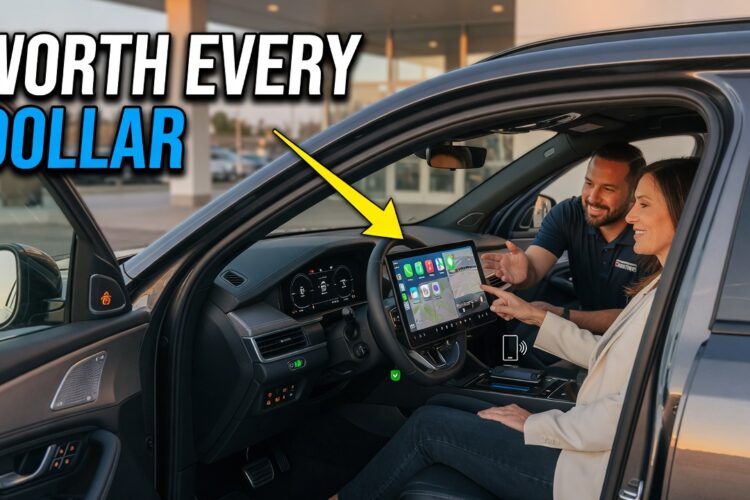
The trend of increasing vehicle connectivity (the ability to remotely start the car, receive software updates over the air rather than at a dealer, utilize embedded connections for things like navigation, etc.) certainly has its benefits – convenience features like being able to start the car from a phone app can be genuinely useful. However, there is a potential downside, in that the longer you own a car, the more likely it is that the manufacturer will cease supporting certain connected features, potentially rendering them completely unusable.
What Happens When Connected Services Are Discontinued
When connected services for a particular make and model are discontinued, the car will still generally be fully functional, but certain convenience features may cease to be available. This can range from features that are only cosmetically useful (infotainment features like music streaming or specific radio stations) to things that can impact driving safety (embedded navigation that no longer receives traffic updates). While this rarely impacts the physical integrity or driver safety features of a car, it’s important to bear in mind that a disconnected car is not the same as the one you test drive at the dealership.
What to Ask About Connected Features on a Used Car
If you’re shopping for a used car and want to ensure that any features you want to use will remain available throughout your ownership, it’s a good idea to ask about end-of-support timelines for connected services. These can vary drastically from manufacturer to manufacturer, and can significantly impact the features available on a used vehicle.
Software Support and Vehicle Longevity
Software support for connected cars is increasingly important in the same way that it is for cell phones; if a manufacturer stops supporting a particular model, not only will it stop receiving updates, but it becomes increasingly difficult to use overall due to its inability to communicate effectively with other devices or services. This is still a relatively new concern for car buyers, and may be worth researching for any car that has particularly tech-focused features.
The Ongoing Shift Toward Electric Vehicles
The used electric vehicle market is growing steadily as more and more electric cars enter the market, reach the age at which they are likely to be traded in or returned to a leasing company, and become eligible for sale again. Our guide to buying a used EV contains more information about the considerations specific to this growing segment of the market.
Vehicle Feature Subscription Models
Some manufacturers offer subscription services that can add features like enhanced driver assistance or performance upgrades to a car, sometimes with the ability to add or remove them at will by renewing or canceling the subscription. This is something you should research for any vehicle you’re considering, as it can drastically impact the features available to you and the overall cost of ownership.
What This Means for Used Car Buyers Now
In short, what this means for used car buyers is that you should research what driver assistance features are genuinely available on a car before purchasing, ask about the lifespan of any connected features, and look into the cost of any subscriptions that might be necessary for features you want to use.
Where to Focus Your Research Today
Rather than focusing on the distant future and the possibility of driverless cars, a used car buyer today should focus on the realities of the market as they exist now. Our guide on used car technology features worth paying for contains more information about what’s genuinely useful today, and our guide to buying a used EV covers the growing segment of the market that is becoming more prominent as more EVs enter the used market for the first time.
How Connectivity Considerations Fit Into Your Overall Purchase Decision
While it’s important to know about the support timelines for connected features on a car, those considerations should not overshadow the rest of the due diligence process involved with purchasing a used car. The overall inspection and cost evaluation process will have a much more tangible effect on your ownership experience than any connected features.
Expert Tips
Understand the specific driver assistance level of any vehicle you’re considering rather than relying on marketing terminology alone.
Ask about connected service and software support timelines for tech-heavy vehicles, particularly ones already several years old.
Check whether any advertised features require an ongoing subscription rather than being included with the vehicle purchase.
Don’t let speculation about future autonomous vehicles delay a practical purchase decision that fits your current needs.
Common Mistakes
Assuming marketing terminology implies more autonomous capability than a vehicle actually has.
Not checking connected service support timelines before assuming a feature will remain functional long-term.
Overlooking subscription-based feature requirements when calculating total ownership cost.
Waiting indefinitely for future technology instead of making a practical purchase decision that fits current needs.
Confusing Level 2 driver assistance with genuine self-driving capability.
Frequently Asked Questions
Are fully self-driving cars available to buy today?
No, consumer vehicles available for purchase today generally offer Level 2 driver assistance at most, requiring active driver attention and readiness to take over at any time.
What does Level 2 autonomy actually mean?
It means the vehicle can handle some combination of steering and speed control under driver supervision, but the driver must remain attentive and ready to take control at any moment.
Will connected features on my used car keep working forever?
Not necessarily – some manufacturers discontinue connected service support for older models, so it’s worth checking published support timelines for any tech-dependent vehicle.
Do I need to worry about software support when buying a used car?
It’s an increasingly relevant consideration, particularly for vehicles that rely heavily on software for core functionality, similar in concept to smartphone software support periods.
Are subscription-based car features common?
Some manufacturers have introduced them for certain enhanced features, so it’s worth checking whether any advertised capability requires an ongoing payment beyond the vehicle’s purchase price.
Is the used EV market growing?
Yes, as more electric vehicles reach typical trade-in and lease-return age, used EV selection and pricing have generally continued to improve for buyers.
Should I wait to buy until fully autonomous cars are available?
This isn’t generally recommended for practical buyers, since widespread fully autonomous personal vehicle ownership for years to come is a distant prospect rather than something imminent.
What’s the difference between driver assistance and autonomous driving?
Driver assistance systems support an attentive driver; autonomous driving would handle the driving task without requiring driver attention, which isn’t broadly available in consumer vehicles today.
How do I check a used car’s connected service support status?
Check the manufacturer’s published support information for that specific model, or ask a dealer directly, since this varies considerably between manufacturers and models.
Does increasing vehicle connectivity affect privacy?
It can, since connected vehicles often collect and transmit data – it’s worth reviewing a manufacturer’s privacy policy for connected services if this is a concern for you.
Summary
The genuinely relevant near-term shifts in mobility for used car buyers are incremental: expanding driver assistance features, increasing connectivity with its own support timeline considerations, and the rise of electric vehicles – not imminent widespread autonomous ownership.
Final Thoughts
It’s easy to get caught up in speculation about the distant future of driving, but the practical decisions facing today’s used car buyer are much more tied to the present. Understanding what technology a specific vehicle actually offers, and purchasing based on what you need rather than what you think you want in the future, is key to successfully navigating today’s market.
Ready to explore current options? Browse used car listings on Car Hub , or create a free account to save vehicles with the features that matter to you.