Essential Vehicle Documents Every Car Owner Should Keep
The Folder Most Owners Don’t Have Until They Need It
Vehicle paperwork is the kind of thing nobody thinks about until they urgently need a specific document – selling the car, filing an insurance claim, renewing registration, or proving maintenance history to a skeptical buyer. Owners who keep a simple, organized system avoid the scramble that everyone else experiences at exactly the wrong moment.
Table of Contents
- The Vehicle Title
- Current Registration
- Proof of Insurance
- Maintenance and Repair Records
- Bill of Sale
- Owner’s Manual and Warranty Documents
- Recall Notices
- How to Organize These Documents
- Expert Tips
- Common Mistakes
- Frequently Asked Questions
The Vehicle Title
The title is the single most important document you’ll hold as a vehicle owner – it’s the legal proof of ownership, and you’ll need the original when selling the car or otherwise transferring ownership. Store it somewhere secure but accessible, since a lost title typically requires a formal replacement process through your local motor vehicle authority, which can take time and involve additional fees.
Current Registration
Registration proves the vehicle is legally authorized for road use and is typically required to be kept in the vehicle itself, often in the glovebox, since it may need to be presented during a traffic stop or accident. Keep a copy at home as well in case the in-vehicle copy is lost or the vehicle is stolen.
Proof of Insurance
Most regions require proof of active insurance to be available while driving, either as a physical card or, increasingly, a digital version through an insurer’s app. Keep a current copy in the vehicle at all times, and it’s worth keeping a copy of your full policy details at home as well, in case you need to reference specific coverage terms after an incident.
Maintenance and Repair Records
A complete maintenance history serves two purposes: it helps you track when routine service is due, and it significantly strengthens a future sale, since buyers place real value on a documented service history when evaluating a used car. Keep receipts, invoices, and any inspection reports together, ideally both as physical copies and photographed or scanned digital backups.
Bill of Sale
The bill of sale documents the terms of your purchase – price, date, and both parties’ information – and can be important for tax purposes, warranty claims, or resolving any future dispute about the transaction terms. Keep this even years after purchase, since it’s part of the vehicle’s permanent ownership record.
Owner’s Manual and Warranty Documents
The owner’s manual contains manufacturer-specific maintenance schedules, warning light explanations, and operational details that are genuinely useful to reference over the life of the vehicle. Warranty documents establish what’s covered and for how long, which matters both for your own reference and for a future buyer if any coverage remains transferable at resale.
Recall Notices
Keep any recall notices you receive, along with documentation that the recall repair was completed, since this can matter for future resale and for confirming the work was actually done. If you’re unsure whether a vehicle has any open recalls, checking your national safety agency’s recall database using the VIN, such as the NHTSA recall lookup tool in the United States, takes just a few minutes.
How to Organize These Documents
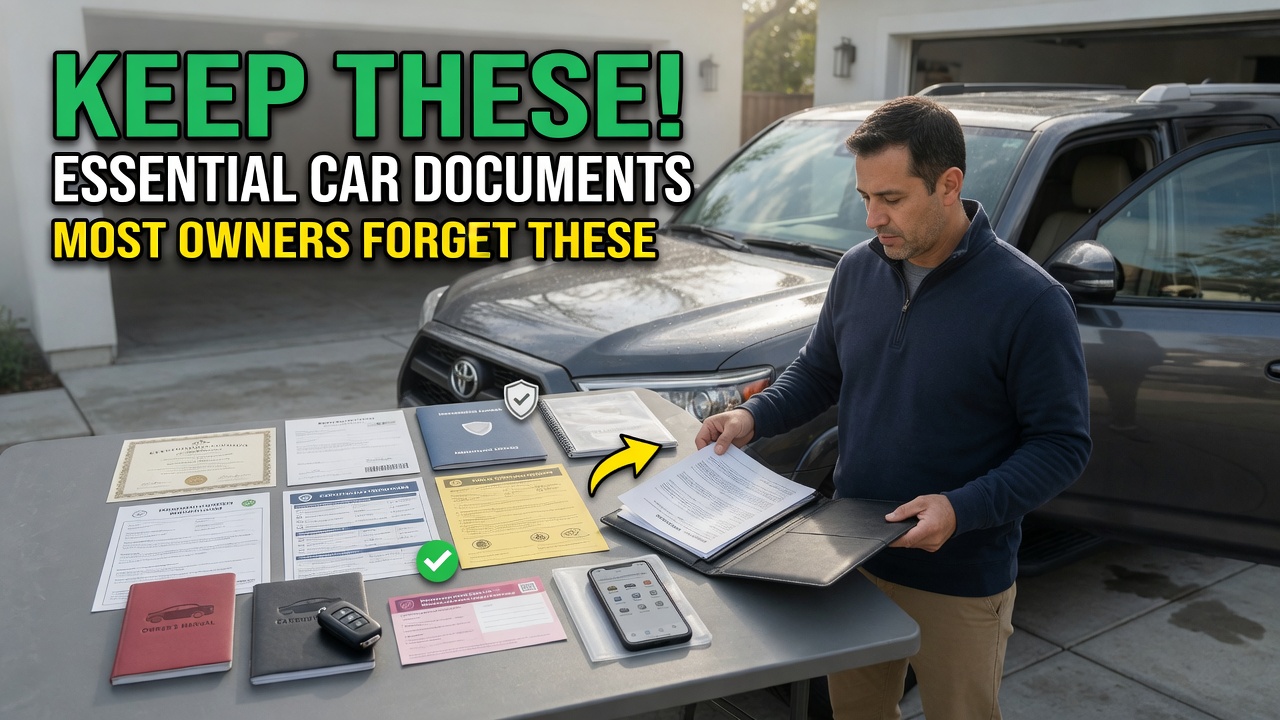
A simple system works well for most owners: a dedicated folder or small file box at home for the title, bill of sale, maintenance records, and warranty documents, with current registration and insurance proof kept in the vehicle itself. Photographing or scanning everything into a digital backup, stored somewhere secure like a personal cloud drive, protects you if the physical documents are ever lost, damaged, or stolen along with the vehicle.
Expert Tips
- Scan or photograph every document as soon as you receive it, building a digital backup as you go rather than trying to catch up all at once later.
- Keep a simple spreadsheet or app-based log of maintenance dates and costs alongside the physical receipts, making it easy to reference at resale time.
- Store the original title somewhere secure at home, not in the vehicle itself, to reduce the risk of loss or theft.
- Check your national recall database periodically using your VIN, even without receiving a formal notice, since some notification systems miss owners after a resale.
Common Mistakes
- Keeping the title in the vehicle, increasing the risk of loss or theft.
- Not keeping maintenance receipts, weakening your negotiating position and buyer trust at resale.
- Losing the original bill of sale, which can complicate tax, warranty, or dispute situations later.
- Relying only on physical copies without any digital backup in case of loss or damage.
- Discarding recall notices once the repair is completed, losing useful documentation for future resale.
Frequently Asked Questions
What documents do I need to keep in my car at all times?
Current registration and proof of insurance are typically required to be accessible while driving, often kept in the glovebox or through a digital insurance app.
What happens if I lose my vehicle title?
You’ll generally need to apply for a duplicate title through your local motor vehicle authority, which usually involves a fee and some processing time.
Do I need to keep every maintenance receipt?
It’s strongly recommended. A complete service history significantly strengthens a future sale and helps you track when routine maintenance is genuinely due.
How long should I keep my bill of sale?
Indefinitely, ideally, since it can matter for tax purposes, warranty claims, or resolving disputes about the original transaction terms even years later.
Is a digital copy of my insurance card acceptable?
In most regions, yes, digital insurance verification through an insurer’s app is increasingly accepted, though it’s worth confirming local requirements.
Should I keep the owner’s manual if I can find it online?
It’s convenient to have a physical or saved digital copy in the vehicle for quick reference, even though many manuals are also available online through manufacturer websites.
What should I do with recall notices after the repair is completed?
Keep documentation that the repair was completed, since it can matter for future resale and for confirming coverage if any related issue arises later.
How do I check if a car has any open recalls?
Use your VIN with your national safety agency’s recall lookup tool, which is typically free and takes just a few minutes to check.
Should I back up my vehicle documents digitally?
Yes, scanning or photographing key documents and storing them securely online protects you if the physical copies are ever lost, damaged, or stolen.
What documents does a buyer typically want to see when I sell my car?
The signed title, maintenance records, and ideally a vehicle history report all help build buyer confidence and can meaningfully speed up a sale.
Summary
Keeping the title, registration, insurance proof, maintenance records, bill of sale, and owner’s manual organized – with digital backups – protects you at every important moment of ownership, from a routine traffic stop to a future sale.
Final Thoughts
None of this paperwork feels urgent until the exact moment you need it, and by then it’s too late to start organizing. A simple system built early saves real stress later, whether that’s next month or years down the road.
Getting ready to sell or buy? List your car or browse used car listings on Car Hub, or create a free account to keep your documents and listings organized in one place.