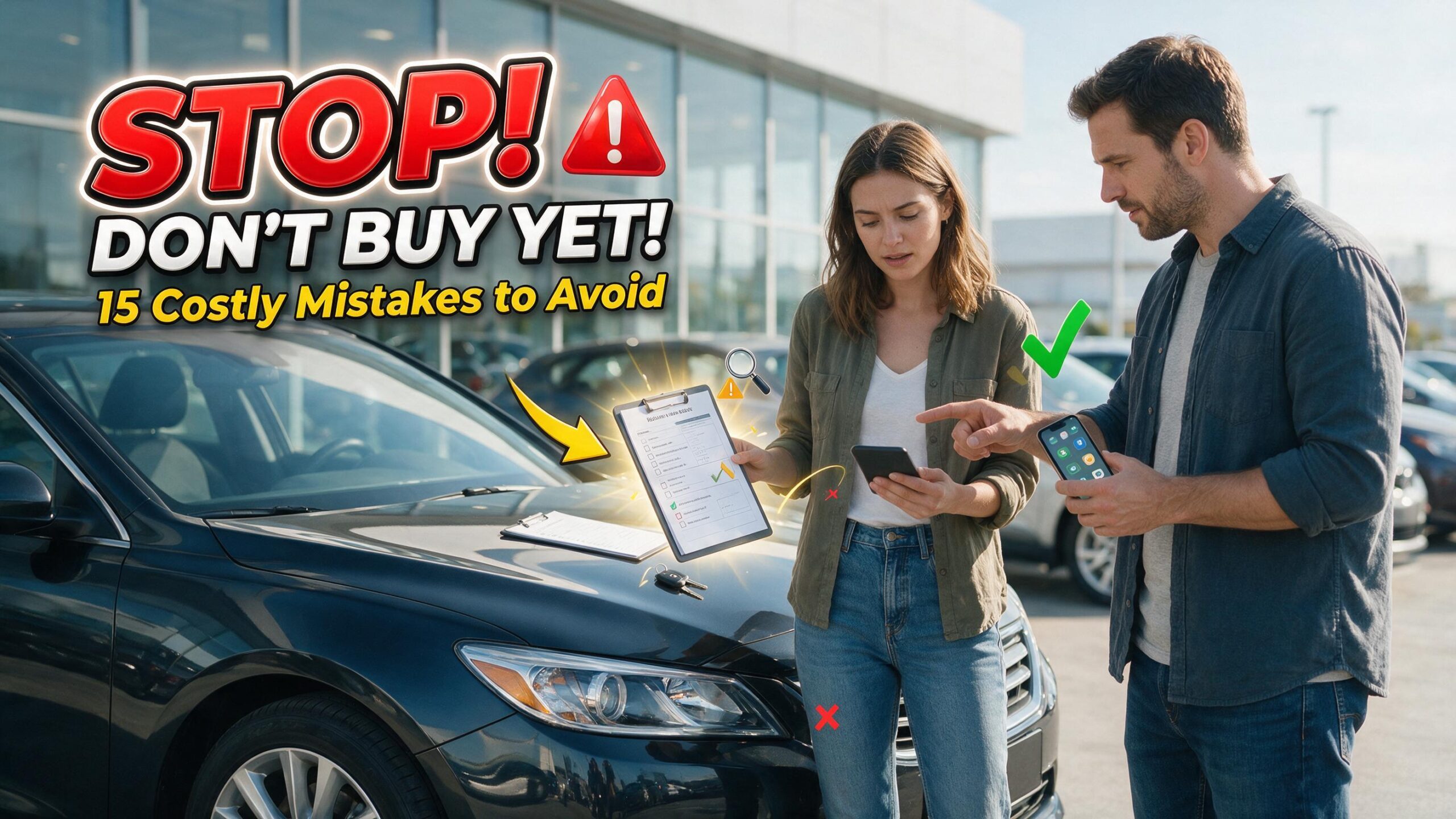
First-Time Car Buyer’s Guide: 15 Mistakes That Cost New Buyers
Your First Car Purchase Teaches Lessons the Hard Way, Unless You Read This First
Almost everyone who’s bought several used cars has a story about their first one – the deal that seemed great until the transmission started acting up, or the financing terms they didn’t fully understand until months later. First-time buyers aren’t unintelligent; they simply haven’t yet learned where the pitfalls are, because nobody hands out a manual before your first purchase.
This guide is that manual. It covers the fifteen mistakes that cost new buyers the most money and stress, organized in the order you’re likely to encounter them.
Table of Contents
- Budget and Financing Mistakes
- Research and Shopping Mistakes
- Inspection and Test Drive Mistakes
- Negotiation Mistakes
- Paperwork and Closing Mistakes
- Expert Tips for First-Time Buyers
- Frequently Asked Questions
Budget and Financing Mistakes
1. Not Accounting for Total Ownership Cost
First-time buyers often budget for the purchase price alone, forgetting insurance, fuel, maintenance, and registration fees. A car that’s affordable to buy can still be unaffordable to own if these recurring costs aren’t factored in from the start.
2. Financing Before Comparing Offers
Accepting the first financing offer, often from the dealer’s finance office, without comparing at least one outside option from a bank or credit union, frequently means paying a higher interest rate than necessary.
3. Letting a Lender Approve You for More Than You Can Comfortably Afford
Loan approval amounts reflect what a lender believes you can technically repay, not necessarily what fits comfortably alongside your other expenses. Set your own budget ceiling independently of the approval amount.
4. Skipping Pre-Approval Entirely
Walking into a dealership without a pre-approved financing benchmark leaves you with no real comparison point for whether their offer is actually competitive.
Research and Shopping Mistakes
5. Not Researching Fair Market Price First
Without checking a real car valuation guide based on recent sales, it’s easy to overpay simply because you don’t have a reliable reference point for what similar vehicles are actually selling for.
6. Ignoring Known Issues for That Specific Model
Every make and model has quirks – some are minor, some are genuinely expensive. A few minutes searching for common problems with that specific year and trim can save significant money down the line.
7. Falling in Love With One Specific Listing
Getting emotionally attached to a single car before you’ve inspected or negotiated removes your ability to walk away, which is your strongest form of leverage in any negotiation.
Inspection and Test Drive Mistakes
8. Skipping the Independent Inspection
This is the single costliest mistake on this list. An inspection fee is a tiny fraction of what a major repair costs, yet it’s the step most frequently skipped by buyers trying to save time or feel they’re being rude by asking.
9. Test Driving Only Around the Block
A short, low-speed test drive misses problems that only appear at highway speed or after the engine reaches full operating temperature. Use our full vehicle inspection checklist as a guide for a more complete evaluation.
10. Not Checking the Vehicle History Report
Skipping this step means missing potentially important information about accidents, title brands, and ownership history that directly affects the car’s real value and condition.
Negotiation Mistakes
11. Negotiating Without a Walk-Away Number in Mind
Entering a negotiation without a firm ceiling in mind makes it easy to get talked up beyond what you originally intended to spend.
12. Not Using Inspection Findings as Leverage
Specific, documented issues from an inspection are far more persuasive in a negotiation than a general request for “a better price,” and sellers tend to respond to them more constructively.
13. Feeling Pressured by Urgency Tactics
Phrases like “someone else is coming to look at it today” are a classic pressure tactic. A genuinely good deal will usually still be available after you’ve taken time to think it over, or a comparable one will come along soon.
Paperwork and Closing Mistakes
14. Paying Before Verifying the Title
Handing over payment before confirming the title is clean, matches the VIN, and matches the seller’s ID can leave you with a car you can’t legally register.
15. Driving Off Without Insurance in Place
Arranging insurance should happen before you leave with the car, not sometime “this week.” Driving uninsured, even briefly, is illegal in most places and leaves you fully exposed if anything happens.
Expert Tips for First-Time Buyers
- Bring a knowledgeable friend or family member along if you can – a second set of eyes often catches things you’d miss on your own, especially the first time through this process.
- Write down your top three priorities (budget, reliability, specific features) before you start shopping, so you’re not swayed by every listing you see.
- Give yourself at least a full day between test driving a car and making a final decision, unless the deal genuinely requires immediate action.
- Ask more questions than feel comfortable. A good seller won’t be bothered, and a bad one revealing themselves early saves you real trouble later.
Frequently Asked Questions
What’s the biggest mistake first-time car buyers make?
Skipping the independent inspection is consistently the costliest mistake, since it’s the step most likely to catch expensive hidden problems before you’ve committed to a purchase.
How much should a first-time buyer budget for a used car?
It depends entirely on individual circumstances, but the budget should include not just the purchase price, but taxes, fees, insurance, and an estimate of near-term maintenance costs.
Should a first-time buyer choose a private seller or a dealer?
Either can work well. Dealers offer more consumer protections and financing convenience, while private sellers are often cheaper but require more due diligence from the buyer.
Is it normal to feel overwhelmed buying a first car?
Completely normal. Breaking the process into clear steps – research, inspection, negotiation, paperwork – makes it far more manageable than trying to handle everything at once.
How do I know if I’m getting a fair price?
Compare the asking price against a proper valuation based on recent actual sales for that specific year, mileage, and condition, rather than relying on the seller’s asking price alone.
Should I get pre-approved for a loan before shopping?
Yes, this is strongly recommended. It gives you a real budget ceiling and a rate benchmark to compare against any dealer financing offer.
What if I can’t tell if a car has hidden problems?
This is exactly what an independent pre-purchase inspection is for – it’s designed to catch issues that aren’t obvious to someone without mechanical training.
Is buying a certified pre-owned car safer for a first-time buyer?
It can add peace of mind through manufacturer-backed inspection and warranty coverage, often making it a reasonable option for buyers who value certainty over the lowest possible price.
How long should the whole buying process take?
There’s no fixed timeline, but rushing through research, inspection, or paperwork to “just get it done” is where most costly mistakes happen. Give yourself enough time to do each step properly.
What should I bring when buying a used car for the first time?
Valid identification, your financing pre-approval information if applicable, a notepad for questions, and ideally a knowledgeable friend if this is genuinely your first purchase.
Summary
First-time buyers lose the most money at four predictable points: skipping the inspection, underestimating true ownership costs, financing without comparison, and rushing under pressure. Slowing down at each of these moments is the single most effective thing a new buyer can do.
Final Thoughts
Everyone’s first car purchase involves some degree of learning as you go, but you don’t have to learn every lesson the expensive way. Following this guide won’t guarantee a flawless experience, but it will close the gap between you and someone who’s done this several times before.
Ready to start? Browse used car listings on Car Hub, or create a free account to save your favorites and get guidance along the way.