SUV vs Sedan vs Hatchback: How to Choose the Right Car Type
The Body Style Debate Everyone Overthinks
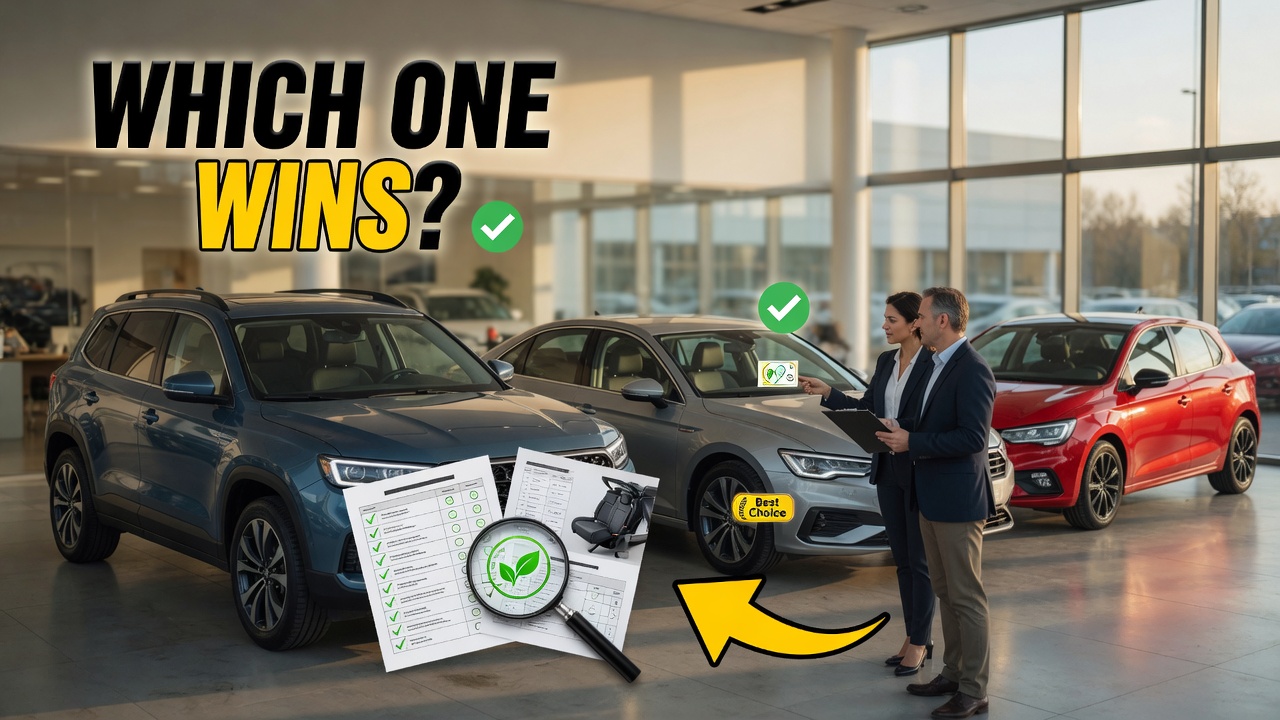
Buyers spend a surprising amount of time debating SUV versus sedan versus hatchback based on image rather than actual use case. A commuter who drives alone on paved roads and rarely hauls anything larger than groceries often doesn’t need an SUV’s extra size, ground clearance, or fuel consumption, no matter how appealing the higher seating position feels. Meanwhile, a family regularly hauling gear for weekend trips may find a sedan’s trunk genuinely limiting no matter how efficient it is.
This guide breaks down the real practical differences between these body styles, so the decision comes from your actual needs rather than showroom impressions.
Table of Contents
- When an SUV Makes Sense
- When a Sedan Makes Sense
- When a Hatchback Makes Sense
- Fuel Economy and Running Cost Differences
- Handling, Safety, and Ride Height
- Resale Value Differences
- How This Plays Out in the Used Market Specifically
- Expert Tips
- Common Mistakes
- Frequently Asked Questions
When an SUV Makes Sense
SUVs generally offer more interior and cargo volume, a higher seating position that many drivers find more comfortable and gives better visibility in traffic, and in many models, available all-wheel drive that helps in poor weather or light off-road conditions. This comes at a cost: higher fuel consumption than an equivalent sedan, generally higher purchase prices for comparable trim levels, and a higher center of gravity that affects handling dynamics, particularly in emergency maneuvers.
SUVs make the most sense for buyers who regularly haul cargo, drive in challenging weather, or simply place a high priority on visibility and interior space over outright efficiency.
When a Sedan Makes Sense
Sedans typically deliver better fuel economy than a comparably sized SUV, a lower center of gravity that generally improves handling and stability, and often a lower purchase price for equivalent trim and feature levels. The tradeoff is less cargo flexibility – a fixed trunk rather than an SUV’s foldable rear seats and open cargo area – and a lower seating position some drivers simply prefer not to have.
For buyers primarily commuting or driving around town without regularly hauling large items, a sedan often represents the more cost-effective choice over the vehicle’s ownership life, particularly on fuel.
When a Hatchback Makes Sense
Hatchbacks split the difference in an underrated way: a smaller overall footprint that’s easier to park and maneuver in tight urban environments, combined with foldable rear seats that offer more cargo flexibility than a sedan’s fixed trunk. They typically retain sedan-like fuel efficiency while adding genuine practicality for larger, irregularly shaped items.
Hatchbacks tend to be underappreciated in markets where SUVs dominate buyer preference, which can occasionally mean better relative value in the used market for buyers willing to consider one.
Fuel Economy and Running Cost Differences
Body style meaningfully affects fuel economy, generally in the order sedan and hatchback being more efficient than a comparably sized SUV, driven by aerodynamics, weight, and typically smaller engines paired with lighter bodies. Over years of ownership and significant annual mileage, this difference compounds into a real cost gap, worth factoring into your total ownership budget alongside the purchase price itself.
Handling, Safety, and Ride Height
A lower center of gravity, typical of sedans and hatchbacks, generally contributes to more predictable handling and better stability during sudden maneuvers. SUVs, particularly older or truck-based models, can be more prone to rollover risk in extreme scenarios, though modern electronic stability control systems have narrowed this gap considerably across recent model years. Ground clearance, an SUV strength, matters more in areas with poor road conditions, deep snow, or unpaved terrain.
Resale Value Differences
Market demand shifts over time, but SUVs have generally held stronger resale value in many markets in recent years due to sustained buyer preference, which can offset some of their higher purchase price and running costs over an ownership period. Sedans in some markets have seen softer demand, occasionally creating better relative value for buyers in the used market willing to go against the prevailing trend.
How This Plays Out in the Used Market Specifically
Because SUV demand has been strong, well-maintained used SUVs sometimes carry a smaller price gap versus new than sedans do, meaning the used sedan market can occasionally offer sharper relative discounts. It’s worth comparing actual local used listings across all three body styles for your specific budget rather than assuming one category is automatically the better used-market value.
Expert Tips
- Track your actual cargo and passenger needs over a typical month before assuming you need an SUV’s extra size.
- Compare real fuel economy ratings, not just body style assumptions, since some hatchbacks and small SUVs have closer efficiency than expected.
- Test drive all three body styles back to back if you’re genuinely undecided – the seating position and visibility differences are easier to feel than to describe.
- Factor resale trends for your specific region, since demand patterns for body styles can vary meaningfully by market.
Common Mistakes
- Choosing an SUV purely for image without actually needing the extra cargo space or ground clearance.
- Underestimating fuel cost differences over years of ownership between body styles.
- Overlooking hatchbacks entirely, missing a genuinely practical and often better-value option.
- Not test driving multiple body styles before assuming a preference based on appearance alone.
- Ignoring how resale trends affect used market value across different body styles in your specific area.
Frequently Asked Questions
Are SUVs less fuel efficient than sedans?
Generally yes, due to greater weight and less aerodynamic shapes, though the gap has narrowed somewhat with modern engine and hybrid technology in newer SUV models.
Is a hatchback the same as a small SUV?
No, hatchbacks are typically lower to the ground and built on a sedan-like platform, while small SUVs (often called crossovers) sit higher and usually offer more ground clearance.
Which body style holds resale value best?
This varies by market and over time, but SUVs have generally held stronger demand and resale value in many recent markets compared to equivalent sedans.
Do I need an SUV if I don’t have kids or haul cargo often?
Not necessarily. If your typical use case is commuting and errands, a sedan or hatchback may serve you just as well at a lower running cost.
Are sedans safer than SUVs?
Modern vehicles across all body styles undergo similar safety testing, and specific model safety ratings matter more than body style generalizations at this point.
Is a used SUV a better value than a used sedan?
It depends on your specific needs and the local used market. Compare actual listings for your budget rather than assuming one body style is automatically better value.
Do hatchbacks have less cargo space than SUVs?
Generally yes in absolute volume, but they typically offer more flexible cargo space than a sedan’s fixed trunk, making them a middle-ground option.
Are SUVs harder to park than sedans?
Often yes, particularly larger SUVs, due to their bigger overall footprint, which is worth considering if you regularly park in tight urban spaces.
Does body style affect insurance costs?
It can, along with the specific model’s safety rating, repair costs, and theft rate, so it’s worth comparing quotes across the specific vehicles you’re considering.
Should I choose based on what’s popular or what fits my needs?
Your actual needs, consistently. Popularity affects resale value and selection, but it doesn’t determine whether a body style actually fits your daily use case.
Summary
SUVs, sedans, and hatchbacks each serve different practical needs: SUVs for cargo and ground clearance, sedans for efficiency and lower running costs, hatchbacks for a flexible middle ground. The right choice comes from your actual driving patterns and cargo needs, not from assumptions about what’s most popular.
Final Thoughts
There’s no universally “better” body style – only the one that fits how you actually live and drive. Taking an honest look at your real needs before shopping saves you from paying for capability you’ll never use, or settling for less space than you actually need.
Ready to compare body styles side by side? Browse used car listings on Car Hub across SUVs, sedans, and hatchbacks, or create a free account to save your favorites.