The True Cost of Owning a Used Car
The Number on the Listing Is Just the Entry Fee
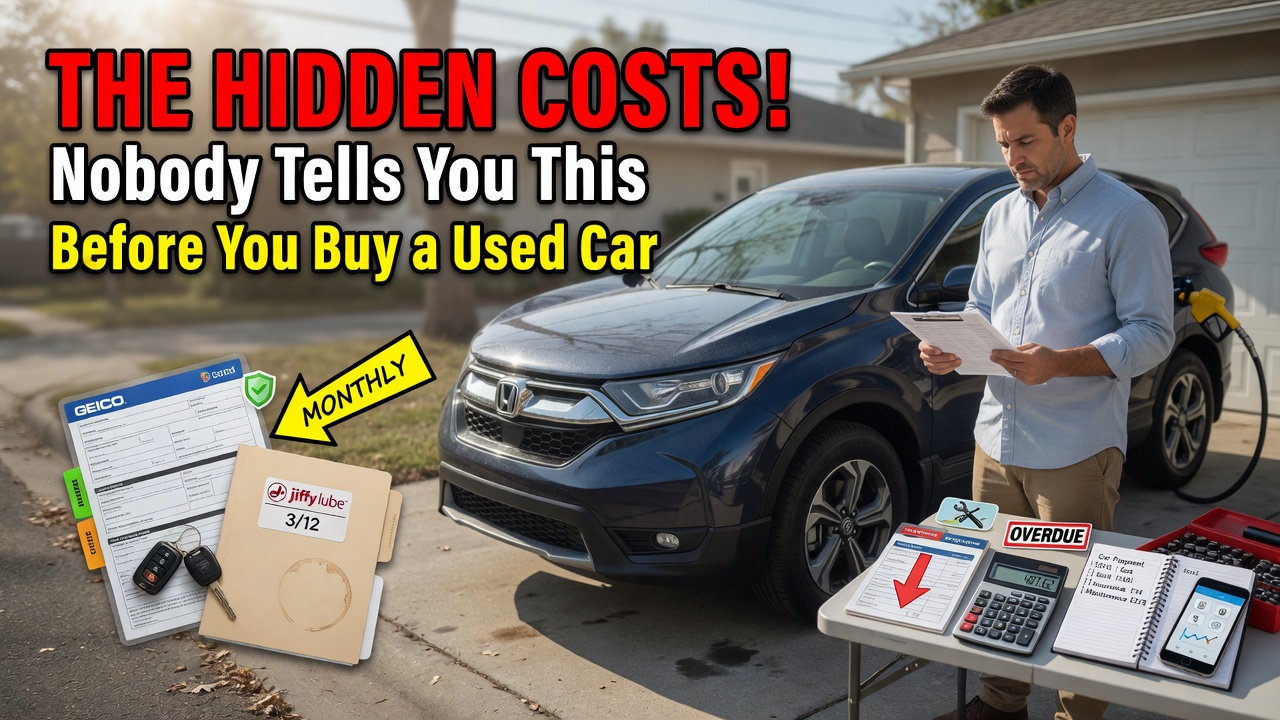
Buyers frequently compare two used cars almost entirely on purchase price, treating the cheaper option as the obviously better financial choice. That’s often wrong. A car’s true cost includes everything that happens after you drive it home – fuel efficiency, how expensive parts and labor are for that specific make, how quickly it depreciates, and what it costs to insure. Two cars priced identically at purchase can differ by thousands of dollars in total cost over a few years of ownership.
This guide breaks down every major category of ownership cost so you can compare vehicles the way it actually matters – not just what you pay to buy it, but what it costs to keep.
Table of Contents
- Depreciation: The Hidden Cost Nobody Sees
- Insurance Costs Over Time
- Fuel Economy and Real-World Costs
- Routine Maintenance
- Unexpected Repairs
- Registration, Taxes, and Fees
- How to Calculate Total Cost of Ownership
- Expert Tips
- Common Mistakes
- Frequently Asked Questions
Depreciation: The Hidden Cost Nobody Sees
Depreciation is the loss in a vehicle’s value over time, and even used cars continue to depreciate, just more slowly than brand new ones, which lose the steepest percentage of value in their first few years. This cost is invisible day-to-day since you’re not writing a check for it, but it shows up directly if you ever sell or trade the car in, and it should factor into how long you plan to keep a vehicle.
Some makes and models hold value significantly better than others due to reputation for reliability, demand, and how many were originally produced. Researching typical depreciation curves for a specific model, not just its current asking price, gives you a clearer sense of what you’ll actually get back if you sell it in a few years.
Insurance Costs Over Time
Insurance is a recurring cost that varies significantly based on the vehicle’s safety rating, repair costs, and theft rate, not just its purchase price. Getting a real quote before buying, as covered in our car insurance guide, reveals cost differences between similarly priced cars that many buyers never think to check until after they’ve already committed to a purchase.
Fuel Economy and Real-World Costs
Fuel costs compound significantly over years of ownership, and the difference between a fuel-efficient vehicle and a thirstier one of similar size can add up to a substantial amount annually depending on how much you drive. Official fuel economy ratings offer a useful starting comparison point, though real-world results vary based on driving habits, terrain, and climate, so treat published figures as a guide rather than an exact prediction.
Routine Maintenance
Every vehicle requires ongoing maintenance – oil changes, brake pads, tires, fluid replacements, and periodic services outlined in the manufacturer’s recommended schedule. Some makes are noticeably more expensive to maintain than others due to part costs and labor complexity, particularly certain luxury and performance brands, so it’s worth researching typical maintenance costs for a specific model before assuming all cars in a similar price range cost the same to keep running.
Unexpected Repairs
Unlike routine maintenance, repairs are unpredictable by nature, but they’re not entirely unknowable. Researching common issues for a specific model year – transmission problems, electrical faults, known engine issues – gives you a realistic sense of what to budget for as a contingency, even if you can’t predict exactly when a repair might be needed. Setting aside a modest monthly amount specifically for unexpected repairs, rather than treating every repair as a financial emergency, keeps ownership costs from derailing your broader budget.
Registration, Taxes, and Fees
Beyond the purchase price, most regions charge sales or use tax, along with annual or biennial registration fees that can vary based on the vehicle’s value, weight, or age. These costs are often overlooked when comparing two vehicles, particularly across different price brackets or vehicle types, and they should be factored into your total ownership comparison rather than treated as an afterthought at the point of registration.
How to Calculate Total Cost of Ownership
A reasonably complete total cost of ownership estimate adds together the purchase price (or total loan payments if financing), estimated insurance over your expected ownership period, fuel costs based on your typical annual mileage, routine maintenance based on the manufacturer’s schedule, a contingency estimate for unexpected repairs, and registration and tax costs, then subtracts an estimated resale value at the point you’d likely sell or trade it in.
Running this calculation for two or three vehicles you’re seriously considering, rather than relying on purchase price alone, often reveals that the “cheaper” car on the lot isn’t actually the cheaper choice over a realistic ownership period.
Expert Tips
- Research typical maintenance costs for the specific model, not just the brand generally, since costs can vary meaningfully even within the same manufacturer’s lineup.
- Get an insurance quote and a fuel economy estimate before finalizing a purchase decision between two vehicles you’re comparing.
- Set aside a dedicated repair fund rather than assuming maintenance costs will simply come out of general savings as they arise.
- Factor in how long you actually plan to keep the car – depreciation and resale value matter far more if you plan to sell in two years versus keeping it for ten.
Common Mistakes
- Comparing only purchase price between two vehicles without factoring in ongoing costs.
- Ignoring insurance costs until after the purchase is already finalized.
- Underestimating maintenance costs for certain makes known for expensive parts and labor.
- Not budgeting for unexpected repairs, treating every repair bill as a surprise rather than an expected part of ownership.
- Forgetting registration and tax costs when comparing vehicles across different price brackets.
Frequently Asked Questions
What’s included in total cost of ownership?
Purchase price or loan payments, insurance, fuel, routine maintenance, unexpected repairs, registration and taxes, minus estimated resale value at the point you’d sell the car.
How much should I budget monthly for used car maintenance?
This varies significantly by make, model, and age, so research typical costs for your specific vehicle rather than relying on a generic estimate.
Does a cheaper used car always cost less overall?
Not necessarily. A lower purchase price can be offset by higher insurance, worse fuel economy, or more frequent repairs, making a pricier alternative the better overall value in some cases.
How much does depreciation matter if I plan to keep the car a long time?
Less than it would for a short-term owner, since depreciation mainly affects your finances if you sell or trade the vehicle. Long-term owners should weight maintenance and reliability more heavily.
Are luxury used cars more expensive to maintain?
Often yes, due to higher part costs and specialized labor requirements, which is worth researching specifically before buying an older luxury vehicle at a tempting purchase price.
How can I estimate fuel costs before buying a car?
Use official fuel economy ratings combined with your typical annual mileage and local fuel prices to get a reasonable estimate, keeping in mind real-world results can vary from published figures.
Should I get an extended warranty to manage repair costs?
It depends on the vehicle’s reliability history and how long you plan to keep it – weigh the warranty’s cost against the likelihood and cost of major repairs for that specific model.
Does driving style affect total ownership cost?
Yes, aggressive driving can increase fuel consumption and accelerate wear on brakes, tires, and other components, meaningfully affecting long-term costs.
How do I compare ownership costs between two specific cars?
Estimate each cost category – insurance, fuel, maintenance, taxes, and expected resale value – for both vehicles over your expected ownership period, then compare the totals rather than just the purchase prices.
Is it worth paying more upfront for a more reliable used car?
Often yes, particularly if it meaningfully reduces expected repair costs and insurance premiums over your ownership period, though the right answer depends on your specific budget and priorities.
Summary
The purchase price of a used car is only the starting point. Insurance, fuel, maintenance, unexpected repairs, taxes, and depreciation combine to determine what a vehicle really costs over time, and comparing these totals – not just the sticker price – leads to genuinely better buying decisions.
Final Thoughts
The cheapest car to buy isn’t always the cheapest car to own. Taking the time to estimate total ownership cost before you commit puts you in a much stronger position to choose a vehicle that actually fits your budget, not just your initial price target.
Ready to compare your options? Browse used car listings on Car Hub and weigh total ownership cost before you decide, or create a free account to save and compare vehicles side by side.