The Used Car Inspection Checklist Every Buyer Needs
What a Fifteen-Minute Look Won’t Tell You
Most used car problems aren’t visible at a glance. A car can look immaculate in a driveway and still be hiding a bent frame, a head gasket on its way out, or suspension components worn well past their safe life. The buyers who get burned usually aren’t careless people – they simply didn’t know what to check, or where to look.
This checklist is built the way a mechanic actually walks a vehicle, not the way a hopeful buyer does. It won’t replace a professional pre-purchase inspection, but it will help you catch the obvious red flags early enough to avoid wasting your time, or the seller’s, on a car that was never going to work out.
Table of Contents
- Exterior and Body Panel Check
- Undercarriage and Frame Inspection
- Engine Bay Inspection
- Interior and Electronics
- Tires and Suspension
- Test Drive Checklist
- Diagnostic Scan and Fault Codes
- When to Bring In a Professional
- Expert Tips
- Common Mistakes
- Frequently Asked Questions
Exterior and Body Panel Check
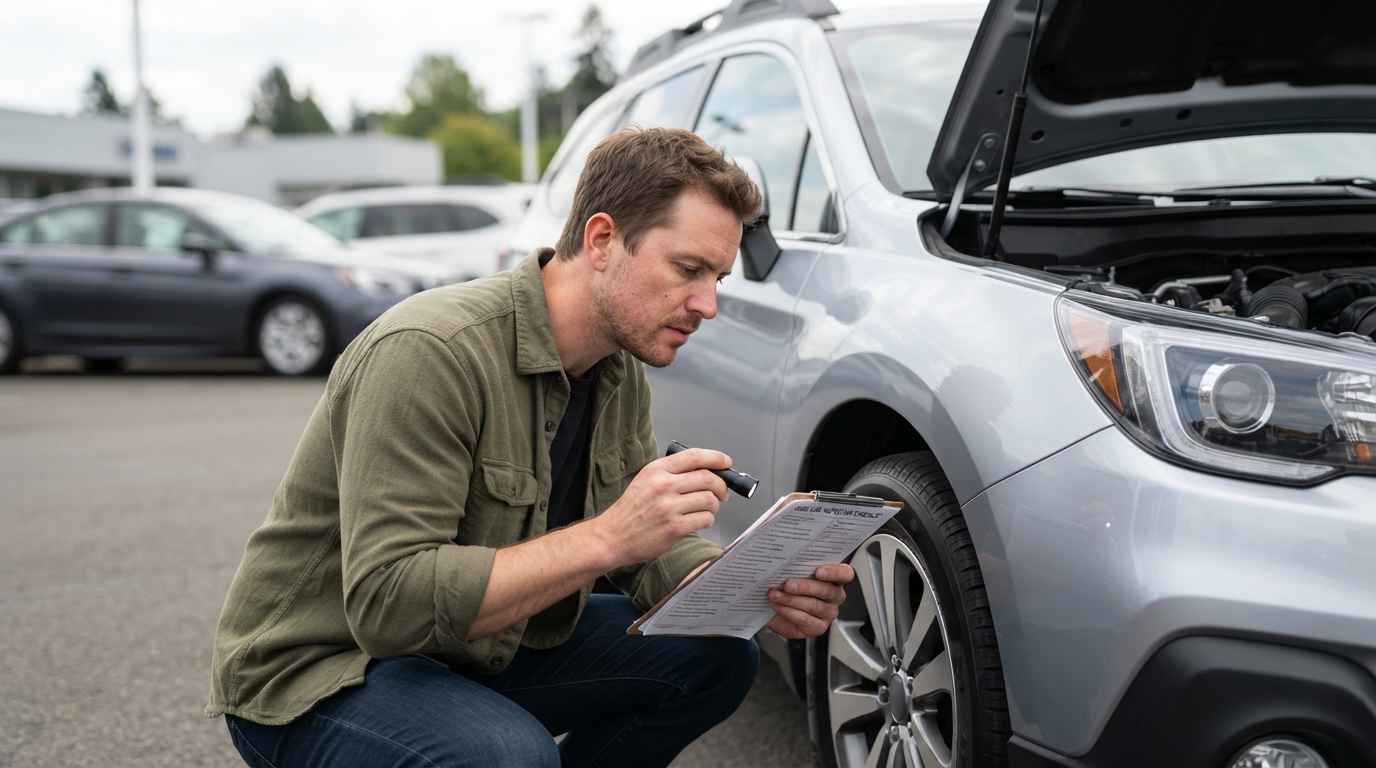
Start outside, in daylight, with the car parked on level ground. Crouch down at each corner and sight down the length of the body – panel gaps should be even and consistent. Wider or uneven gaps around a door, fender, or hood often indicate prior collision repair, even on a car with a “clean” history report, since not every accident gets reported to insurers.
Look closely at paint color and texture across adjacent panels. A slight mismatch, orange-peel texture on one panel but not others, or overspray on rubber trim and door jambs are classic signs of repainting after body work. None of these are automatic dealbreakers, but they’re worth asking about directly.
The Magnet Test
A small magnet, run gently over body panels, won’t stick to areas filled with body filler used to mask dents or rust repair. It’s a quick, low-cost way to check suspicious-looking panels without needing specialized equipment.
Undercarriage and Frame Inspection
If you can get the car on a lift, even briefly, do it – this is where the most serious and expensive problems hide. Look for uniform surface rust, which is normal and expected on an older vehicle, versus heavy flaking rust or rust concentrated around structural frame rails, which is a more serious concern, particularly in regions with harsh winters and heavy road salt use.
Check for fresh undercoating applied only in specific spots rather than evenly across the whole underside – this sometimes indicates an attempt to hide frame repair or rust damage rather than genuine rust prevention. Look also for any signs of frame straightening: ripples in metal, non-factory welds, or replaced structural components.
Engine Bay Inspection
With the engine cold, check for any visible fluid leaks – oil, coolant, transmission fluid, or power steering fluid – around gaskets, hoses, and the base of the engine. Pull the oil dipstick and check the color and consistency; it should be relatively clean and amber to dark brown, not gritty, milky, or smelling burnt.
Check the coolant reservoir for a healthy color appropriate to that coolant type, without oil contamination, which can indicate a failing head gasket. Inspect belts and visible hoses for cracking, and note the general cleanliness of the engine bay – not because a dirty engine is inherently bad, but because an unusually spotless engine bay can sometimes mean it’s been cleaned specifically to hide a recent leak.
Start It Cold
Whenever possible, ask to see the car started from completely cold, not after it’s already been warmed up before you arrived. Cold starts reveal problems – excessive smoke, rough idle, unusual noises – that disappear once the engine reaches operating temperature.
Interior and Electronics
Wear inside the cabin should roughly match the mileage on the odometer. A driver’s seat bolster worn through, a steering wheel polished shiny, or pedal rubber worn flat on a car claiming low mileage is a red flag worth taking seriously – it can indicate odometer tampering.
Test every electrical feature methodically: power windows on all doors, power seats, air conditioning (cold air, not just fan noise), heating, infotainment and touchscreen response, all exterior lights, and the horn. Small electrical issues are inexpensive to ignore during inspection but often more expensive to diagnose and fix after purchase, especially on vehicles with complex electronics.
Tires and Suspension
Tire wear tells an honest story. Even wear across the tread suggests a well-aligned, well-maintained car. Wear concentrated on the inner or outer edge, or wear that differs significantly between the front and rear axles, suggests alignment or suspension issues that may need addressing soon.
Push down firmly on each corner of the car and release – it should settle back to level within one bounce. Continued bouncing indicates worn shocks or struts, a repair that’s not urgent for safety in most cases but does affect ride quality and tire wear over time.
Test Drive Checklist
Drive on a mix of road types: stop-and-go streets, a highway on-ramp, and if possible a rough or unpaved section. Listen for clunks over bumps, which often point to worn suspension bushings or ball joints, and pay attention to how the transmission shifts – hesitation, harsh shifts, or slipping between gears are all worth investigating further before buying.
Test the brakes firmly in a safe, empty area, checking for pulling to one side, unusual noise, or a soft, spongy pedal feel, which can indicate air in the brake lines or worn components.
Diagnostic Scan and Fault Codes
A basic OBD-II scan, which many auto parts stores will run for free, can reveal stored fault codes even if the check engine light isn’t currently illuminated. Some sellers clear codes right before a showing, so ask specifically whether the scan shows any pending or historical codes rather than just current ones.
When to Bring In a Professional
Once you’ve cleared the car through this checklist without major red flags, it’s worth paying for an independent mechanic’s pre-purchase inspection before finalizing anything. A professional inspection typically includes a compression test, a more thorough undercarriage assessment on a lift, and a detailed review that goes well beyond what’s practical to check yourself in a driveway or parking lot.
Expert Tips
- Bring a flashlight, even during the day – it helps reveal texture differences in paint and shadowed areas under the car.
- Photograph everything as you inspect, including the VIN plate, odometer, and any concerning areas, so you can review details later or share them with a mechanic.
- Compare the VIN on the dashboard, door jamb, and title – they should all match exactly.
- If a seller refuses an independent inspection outright, treat that as a significant red flag rather than a minor inconvenience.
Common Mistakes During Inspection
- Inspecting in poor lighting, which hides paint mismatches and rust that would be obvious in daylight.
- Skipping the cold start, missing symptoms that only show up before the engine warms up.
- Not checking VIN consistency across the dashboard, door jamb, and title.
- Relying only on a test drive without a diagnostic scan or undercarriage check.
- Assuming a clean history report means a clean inspection – reports only reflect what was formally submitted, not everything that happened to the car.
Frequently Asked Questions
How much does a pre-purchase inspection cost?
Costs vary by region and shop, but it’s generally a small fraction of what a single major repair would cost, making it one of the best-value steps in the entire buying process.
Can I inspect a car myself without a mechanic?
You can catch many obvious issues yourself using a checklist like this one, but a trained mechanic will catch problems – like early transmission wear or subtle frame damage – that aren’t visible without experience and proper tools.
What’s the most important thing to check on a used car?
There’s no single most important item, but undercarriage and frame condition combined with engine health tend to carry the highest repair costs if something’s wrong.
Is rust always a dealbreaker?
Not necessarily. Surface rust is common and often manageable, but structural rust on frame rails or suspension mounting points is more serious and should be evaluated by a professional.
How do I check if a car’s mileage has been tampered with?
Compare interior wear to the claimed mileage, check service records and old inspection stickers for previous mileage readings, and review the vehicle history report for inconsistencies.
Should I inspect a car before or after negotiating price?
Before. Inspection findings give you specific, defensible reasons to negotiate, rather than negotiating blind and finding problems afterward.
What tools do I need for a basic inspection?
A flashlight, a small magnet, a tire tread depth gauge, and access to an OBD-II scanner cover most of what you can reasonably check yourself.
Can a car pass inspection and still have hidden problems?
Yes. Even a professional inspection has limits, and some issues, like early-stage internal engine wear, may not show up until they progress further.
Do electric and hybrid vehicles need a different inspection approach?
Yes, battery health and hybrid system diagnostics are important additions, often requiring a specialist familiar with that specific drivetrain.
What should I do if the inspection reveals a major issue?
Use it as a negotiating point, ask the seller to address it before sale, or walk away entirely if the repair cost changes the deal’s value significantly.
Summary
A proper inspection moves from the outside in: body and paint, undercarriage, engine bay, interior electronics, tires and suspension, then a real test drive and diagnostic scan. Skipping any one of these steps leaves room for exactly the kind of problem that turns a good deal into an expensive mistake.
Final Thoughts
An inspection isn’t about being suspicious of every seller – it’s about making sure the price you’re paying matches the condition you’re actually getting. The buyers who do this consistently end up with far fewer surprises down the road.
Found a car worth inspecting? Browse verified listings on Car Hub, and use our full vehicle inspection checklist tool before you commit to anything.