The Complete Guide to Buying a Used Car
Buying a Used Car Doesn’t Have to Feel Like Gambling
Most people remember their first used car purchase for the wrong reasons. Maybe it was the transmission that started slipping three weeks after the sale, or the “clean title” that turned out to have a flood history nobody mentioned. Used car buying has a reputation problem, and it’s earned – not because most sellers are dishonest, but because most buyers don’t know what questions to ask.
That’s really what separates a good used car purchase from a bad one: information. The car itself rarely changes between the moment you look at it and the moment you sign the paperwork. What changes is how much you know about it. This guide walks through the entire process the way an experienced buyer actually approaches it – not the sanitized version, but the one that accounts for negotiation tactics, hidden costs, and the small details that separate a solid deal from a regretted one.
Table of Contents
- Setting a Realistic Budget
- Researching Before You Shop
- Dealer vs Private Seller vs Online Marketplace
- Why the Pre-Purchase Inspection Is Non-Negotiable
- Reading a Vehicle History Report
- The Test Drive Checklist
- Negotiating Without Feeling Awkward
- Paperwork, Title, and Registration
- Expert Tips
- Common Mistakes
- Frequently Asked Questions
Setting a Realistic Budget (Beyond the Sticker Price)
The number on the listing is never the number you’ll actually spend. Sales tax, registration fees, documentation fees, and often an inspection cost all sit on top of the purchase price, and buyers who don’t plan for them end up stretching further than they meant to. A reasonable rule is to budget an extra 8-12% on top of the asking price for these add-ons, though this varies by region.
There’s also a distinction worth making between what you can afford and what you should spend. If you’re financing, lenders will often approve you for more than is comfortable given your other expenses. A used car payment that fits cleanly into your budget – insurance, fuel, and maintenance included – protects you from the kind of financial stress that turns car ownership into a burden instead of a convenience.
Factor In Ownership Costs, Not Just Purchase Price
A cheaper car isn’t always the cheaper choice. An older vehicle with a history of expensive repairs, poor fuel economy, or high insurance premiums can cost more over three years than a slightly pricier, better-maintained alternative. Before falling in love with a listing, it’s worth checking typical maintenance costs and insurance quotes for that specific make and model.
Researching Before You Shop
Walking into a dealership or messaging a private seller without research puts you at an immediate disadvantage. You want to know, before you ever see the car in person, what a fair price looks like for that year, trim, mileage, and condition combination in your area. Pricing guides, recent sold listings, and a proper car valuation guide will give you a realistic range rather than relying on what the seller is asking.
It also pays to look up known issues for that specific model year. Every car has quirks – some are cosmetic, some are expensive. A quick search for “[model] [year] common problems” often surfaces owner forums and recall data that tell you exactly what to check during inspection.
Check for Open Recalls
Recalls are free to fix but easy to miss, especially on used vehicles that have changed hands more than once. Before buying, run the VIN through your national safety agency’s recall lookup tool. In the United States, the NHTSA recall search covers this in under a minute and it’s one of the few checks that costs you absolutely nothing to do.
Dealer, Private Seller, or Online Marketplace?
Each channel has a different risk and reward profile. Dealers typically charge more but offer some form of recourse, warranty options, and financing on-site. Private sellers are usually cheaper because there’s no dealership overhead, but you’re on your own if something goes wrong after the sale. Online marketplaces sit in between – wider selection, often better pricing transparency, but you still need to verify the seller and the vehicle independently.
None of these is universally “safer” than the others; the safety comes from your own due diligence, not the channel. A private seller with full service records and a clean history report can be a far better bet than a dealer trying to move a trade-in they haven’t properly reconditioned.
Questions to Ask Any Seller, Dealer or Private
Why are you selling? How long have you owned it? Has it been in any accidents? Is there a lien on the title? Do you have maintenance records? A seller who answers quickly and specifically is usually more trustworthy than one who gets vague or defensive. You can browse verified listings and compare seller types directly by choosing to browse used cars across both dealer and private inventory in one place.
Why the Pre-Purchase Inspection Is Non-Negotiable
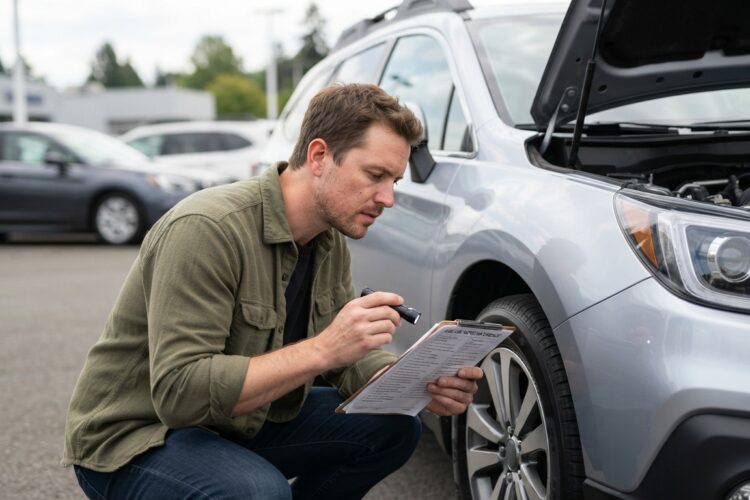
If you take away one thing from this entire guide, make it this: never buy a used car without an independent inspection, ideally from a mechanic who has no relationship with the seller. A pre-purchase inspection typically costs a fraction of what a single major repair would cost, and it catches problems that aren’t visible during a fifteen-minute test drive – things like frame damage, worn suspension components, or a head gasket starting to fail.
Use our vehicle inspection checklist as a starting point even before you bring in a professional. It won’t replace a trained eye, but it will help you spot obvious red flags early enough to walk away before wasting anyone’s time, including your own.
What a Good Inspection Actually Covers
A thorough inspection goes beyond popping the hood and looking for leaks. It includes a compression test or at minimum a diagnostic scan for stored fault codes, a check of tire wear patterns (which reveal alignment and suspension issues), an undercarriage inspection for rust and prior repair welds, and a review of fluid condition across the engine, transmission, and brakes.
Reading a Vehicle History Report Properly
A vehicle history report tells a story, but only if you know how to read between the lines. A single reported accident isn’t automatically a dealbreaker – a minor bumper tap reported by an insurer looks identical on paper to a rear-end collision, until you check the repair records. What matters more is the pattern: multiple owners in a short period, a lapse in registration that might indicate the car was sitting unused (or worse, in storage after a total loss claim), or a title branded as salvage, rebuilt, or flood-damaged.
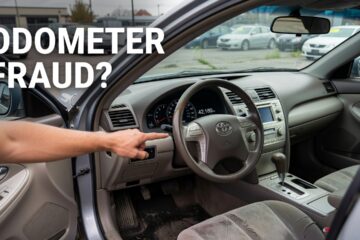
It’s worth cross-referencing the mileage on the report against the odometer reading in person and the numbers on old service stickers or invoices. Odometer discrepancies are one of the clearer signs of fraud, and they’re also one of the easiest things to check.
The Test Drive Checklist
A test drive should last longer than five minutes around the block. Ask to drive it on a mix of surface streets and, if possible, a highway on-ramp, so you can feel how it behaves at speed. Listen for anything you wouldn’t hear in your own car – clunks over bumps, whining under acceleration, or a transmission that hesitates before shifting.
Test the brakes deliberately, including a firm stop from higher speed in a safe, empty area. Check that the steering doesn’t pull to one side, that the air conditioning and heater both work, and that every electrical feature – power windows, infotainment, seat adjustments – functions as expected. Small electrical faults are cheap to ignore and expensive to fix later.
Negotiating Without It Feeling Like a Confrontation
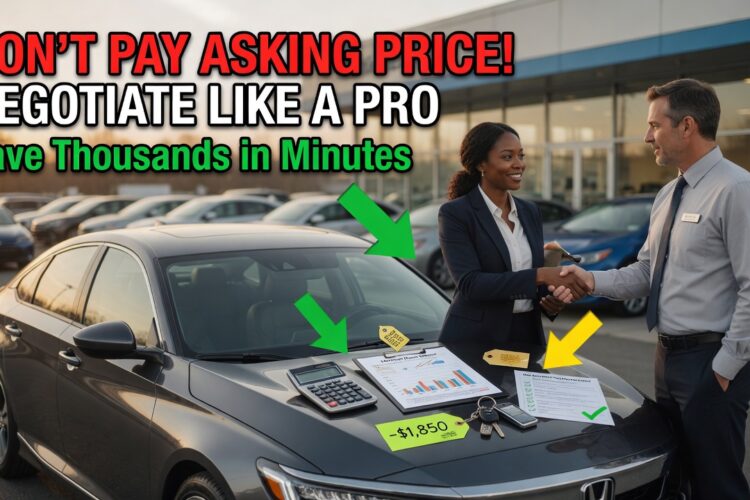
Good negotiation isn’t about being aggressive – it’s about having better information than the other side expects. If your inspection turned up a needed brake job or worn tires, that’s a specific, defensible reason to ask for a lower price or a repair credit, and most sellers respond better to specifics than to a vague “can you do better on price.”
It also helps to know your walk-away point before you start talking numbers. Decide in advance what you’re willing to pay and stick to it. Sellers can usually tell the difference between a buyer who’s genuinely willing to leave and one who’s bluffing, and the calm ones tend to get better deals.
Paperwork, Title, and Registration
Once you’ve agreed on a price, the transaction still isn’t finished until the paperwork is right. You’ll need a properly signed title (with no liens, or a clear lien release), a bill of sale, and in most regions, an emissions or safety inspection before registration. Never hand over full payment until you’ve physically verified the title matches the VIN on the car and the seller’s ID matches the name on the title.
Registration requirements vary significantly by country and even by state or province, so check with your local motor vehicle authority for exact steps and deadlines. In general, you’ll want insurance in place before you drive the car home, since driving uninsured – even for a short trip – is illegal in most jurisdictions and leaves you completely exposed if something happens.
Expert Tips
- Always inspect and test drive during daylight, so you can properly see paint mismatches, rust, and body panel gaps that reveal prior accident repairs.
- Bring a magnet – it won’t stick to body filler used to hide rust or accident damage, which is a quick and low-tech way to check panels.
- Ask for a printout of a diagnostic scan rather than just watching the dashboard warning lights, since some sellers reset codes right before a showing.
- If a deal feels rushed – “someone else is coming to look at it this afternoon” – slow down rather than speed up. Urgency is a classic pressure tactic.
Common Mistakes Buyers Make
- Skipping the inspection to save money. An inspection fee is a rounding error compared to a failed transmission.
- Falling in love with one specific car. This kills your negotiating leverage and your ability to walk away from a bad deal.
- Ignoring total cost of ownership. Insurance and fuel costs can make a “cheap” car more expensive over time than a pricier, more efficient one.
- Not test driving on varied roads. A quiet parking lot won’t reveal highway vibrations or rough idle at speed.
- Paying before verifying the title. This is how buyers end up with cars they can’t legally register.
Frequently Asked Questions
How many miles is too many for a used car?
There’s no universal cutoff – a well-maintained car with 100,000 miles can outlast a neglected one with 60,000. Focus on maintenance records and inspection results rather than mileage alone.
Should I buy an extended warranty on a used car?
It depends on the vehicle’s age, reliability history, and how long you plan to keep it. Weigh the warranty cost against the likelihood and cost of major repairs for that specific model.
Is it better to buy a used car with cash or financing?
Cash avoids interest entirely, but financing can make sense if it lets you keep savings for emergencies, provided the interest rate and terms are reasonable for your situation.
Can I return a used car if something’s wrong after I buy it?
Generally no, unless the seller offered a specific return policy or warranty in writing. This is exactly why a pre-purchase inspection matters so much – there’s rarely a safety net afterward.
How do I know if a used car has been in a flood?
Check the vehicle history report for flood or salvage branding, and look for musty odors, water stains under carpets, or corrosion on screws and metal fasteners in unexpected places.
What documents do I need to buy a used car?
Typically a valid ID, proof of insurance (arranged before you drive it home), and payment method. The seller needs to provide the signed title and, in many regions, a bill of sale.
Should I buy a used car from out of state or out of my country?
It can offer more selection and sometimes better pricing, but factor in additional registration steps, potential emissions requirements, and transport logistics before committing.
How long should a pre-purchase inspection take?
A thorough inspection typically takes 45 minutes to over an hour. Anything much shorter may not be checking everything it should.
Is a certified pre-owned (CPO) car worth the extra cost?
CPO programs add manufacturer-backed inspection and warranty coverage, which can be worth it for buyers who value peace of mind over the lowest possible price.
What’s a fair negotiation range on a used car?
It depends entirely on the vehicle’s condition versus its listed price, but inspection findings and comparable local listings give you real, defensible numbers rather than a guess.
Summary
Buying a used car well comes down to sequencing: research before you shop, inspect before you negotiate, verify before you pay, and finalize paperwork before you drive away. Buyers who skip steps to save time almost always end up spending more later, either in repairs or in regret.
Final Thoughts
There’s no such thing as a completely risk-free used car purchase, but there is such a thing as a well-informed one. The gap between a great deal and a costly mistake usually isn’t about luck – it’s about how many of these steps you actually followed.
Ready to put this into practice? Browse verified used car listings on Car Hub, or if you’re not quite ready to buy, create a free account to save searches and get notified when the right car hits the market.