
How to Buy a Used Car from a Dealer: What to Expect
Dealers Aren’t the Enemy, But They Aren’t Your Friend Either
There’s a persistent myth that buying from a dealer means overpaying by default, and an opposite myth that dealer protections make price irrelevant. Neither is quite right. A dealership is a business optimizing for margin across several parts of a single transaction – the car’s price, your trade-in, the financing, and any add-on products. Understanding how those pieces connect is what lets you buy from a dealer confidently instead of walking away wondering if you left money on the table.
This guide covers what actually happens during a dealer transaction, where the real negotiating room is, and how to use the protections dealers offer without overpaying for them.
Table of Contents
- Why Buy From a Dealer Instead of a Private Seller
- How Dealer Pricing Actually Works
- Trading In Your Old Car
- The Finance Office: What to Watch For
- Add-Ons and Aftermarket Products
- Certified Pre-Owned Programs Explained
- Negotiating With a Dealer Effectively
- Dealer Red Flags to Watch For
- Expert Tips
- Common Mistakes
- Frequently Asked Questions
Why Buy From a Dealer Instead of a Private Seller
Dealers offer things a private seller structurally can’t: on-site financing, the ability to trade in your current vehicle as part of the deal, some form of recourse if something goes seriously wrong shortly after purchase, and often a reconditioning process before the car is listed for sale. These conveniences carry a real cost, usually reflected in a higher asking price than a comparable private-party vehicle.
Whether that premium is worth it depends on how much you value convenience and protection versus squeezing out the lowest possible price. Neither choice is objectively correct – it’s a tradeoff worth making consciously rather than by default.
How Dealer Pricing Actually Works
A dealer’s asking price typically reflects what they paid for the vehicle (often at auction or through a trade-in), reconditioning costs, and their target margin. Listed prices usually have some room built in for negotiation, though how much varies significantly by dealership, vehicle demand, and how long the car has been sitting on the lot – cars that have been listed longer often have more negotiating room, since holding inventory costs dealers money every day.
Checking a proper car valuation guide before you visit gives you a realistic target price independent of whatever number is on the windshield, which is exactly the leverage you need going into a conversation.
Trading In Your Old Car
Trading in your current vehicle is convenient – one transaction instead of two – but dealers typically offer somewhat less for a trade-in than you’d get selling it privately, since they need margin to resell it themselves. It’s worth getting an independent valuation of your trade-in beforehand, and ideally a couple of outside offers, so you know whether the dealer’s trade-in number is reasonable or worth countering.
Keep the Trade-In Negotiation Separate
Dealers sometimes present the deal as a single combined number – new car price minus trade-in value equals what you owe. This makes it harder to tell whether you’re getting a fair price on either side individually. Ask for the trade-in value and the vehicle price to be quoted separately, so you can evaluate and negotiate each on its own merits.
The Finance Office: What to Watch For
The finance office is where a dealership often makes some of its highest margin, sometimes through a markup on the interest rate they secure from a lender, and sometimes through add-on products. Walking in with your own pre-approved financing, even if you end up not using it, gives you a real benchmark to hold their offer against, and you’re never obligated to accept anything less favorable than what you’ve already secured elsewhere.
Add-Ons and Aftermarket Products
Extended warranties, paint and fabric protection, gap insurance, and etching packages are commonly offered during the finance conversation, often bundled into the loan itself where their cost is easy to overlook against a slightly higher monthly payment. Some of these have genuine value depending on your situation; others are priced well above their actual cost to the dealer. Evaluate each one individually, on its own terms, rather than accepting a bundled package as a single decision.
Certified Pre-Owned Programs Explained
Certified Pre-Owned, or CPO, vehicles go through a manufacturer-defined inspection and reconditioning process and typically come with an extended warranty backed by the manufacturer rather than just the dealership. This adds cost compared to a non-certified used vehicle of the same age and mileage, but it also adds a meaningful layer of protection and standardized inspection that can be worth it for buyers prioritizing certainty over the lowest possible price.
Negotiating With a Dealer Effectively
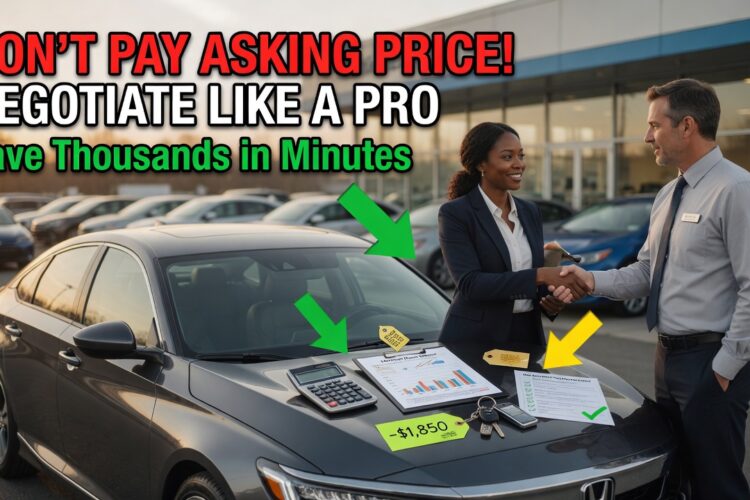
Come in with three numbers already researched: a fair price for the vehicle based on comparable sales, a fair value for your trade-in if applicable, and a financing rate you’ve already been pre-approved for elsewhere. Negotiate each of these as separate line items rather than letting the dealer present a single bottom-line monthly payment, which makes it much harder to evaluate whether you’re actually getting a good overall deal.
Dealer Red Flags to Watch For
Be cautious of dealers who are reluctant to allow an independent pre-purchase inspection, who pressure you to sign paperwork before you’ve reviewed all the terms, or who present financing as a “take it or leave it” bundle without breaking down the individual numbers. A reputable dealer generally welcomes an independent inspection and is transparent about pricing breakdowns, since it reflects confidence in the vehicle and the deal they’re offering.
Expert Tips
- Visit near the end of the month or a sales period if possible – dealers are sometimes more flexible on price when working toward volume targets.
- Always request an independent inspection, even on a certified pre-owned vehicle, since certification standards vary between manufacturers.
- Read every line of the final purchase agreement before signing, checking specifically that the price and terms match what was verbally agreed.
- Ask for an itemized price breakdown rather than a single bottom-line number, so you can identify exactly where any added costs are coming from.
Common Mistakes
- Negotiating only the monthly payment instead of the vehicle price, trade-in value, and financing rate separately.
- Skipping an independent inspection because the car came from a dealer and feels inherently more trustworthy.
- Accepting bundled add-ons without evaluating each one’s individual value.
- Not getting a trade-in valuation elsewhere first, making it hard to know if the dealer’s offer is fair.
- Signing paperwork under time pressure without fully reading the terms.
Frequently Asked Questions
Is it more expensive to buy from a dealer than a private seller?
Usually yes, on average, reflecting the dealer’s overhead, reconditioning, and margin, but it comes with added convenience and protections a private sale doesn’t offer.
Can I negotiate the price at a dealership?
Generally yes. Listed prices typically have some built-in room, though it varies by dealership and how long the vehicle has been in inventory.
Should I get my trade-in appraised elsewhere first?
It’s a good idea. An independent valuation or outside offer gives you a benchmark to compare against the dealer’s trade-in number.
What is a certified pre-owned vehicle?
A used vehicle that’s gone through a manufacturer-defined inspection and reconditioning process, typically backed by an extended manufacturer warranty, at a higher price than a non-certified equivalent.
Do I have to buy add-ons the finance office offers?
No, these are optional products. Evaluate each on its own merits and feel free to decline any that don’t clearly fit your situation.
Can I bring my own mechanic to inspect a dealer’s car?
In most cases yes, and a reputable dealer will generally accommodate this. Reluctance to allow it is worth treating as a caution sign.
Is dealer financing ever better than my own bank’s rate?
It can be, particularly during manufacturer promotional periods, but you won’t know unless you compare it against a pre-approval from your own bank or credit union.
What paperwork should I review carefully before signing?
The final purchase agreement, financing contract, and any add-on product agreements – check that the numbers match what was verbally discussed before signing anything.
Do dealers offer any kind of warranty on used cars?
It varies. Some offer a limited warranty on certain vehicles, particularly certified pre-owned ones, while others sell as-is. Always confirm what, if anything, is covered before you buy.
How do I know if a dealer’s price is fair?
Compare it against a proper valuation based on recent comparable sales for that specific year, mileage, and condition, rather than relying on the dealer’s listed price alone.
Summary
Buying from a dealer trades a higher price for convenience and protection. Getting the most value means negotiating the vehicle price, trade-in, and financing as separate line items, getting an independent inspection regardless of dealer reassurances, and evaluating every add-on individually rather than as part of a bundle.
Final Thoughts
A dealership transaction isn’t inherently worse than a private sale – it’s just a different set of tradeoffs. Buyers who understand where the real negotiating room sits consistently do better than those who simply accept the first number on the sticker.
Ready to compare dealer and private listings side by side? Browse used car listings on Car Hub, or create a free account to save and compare your options.