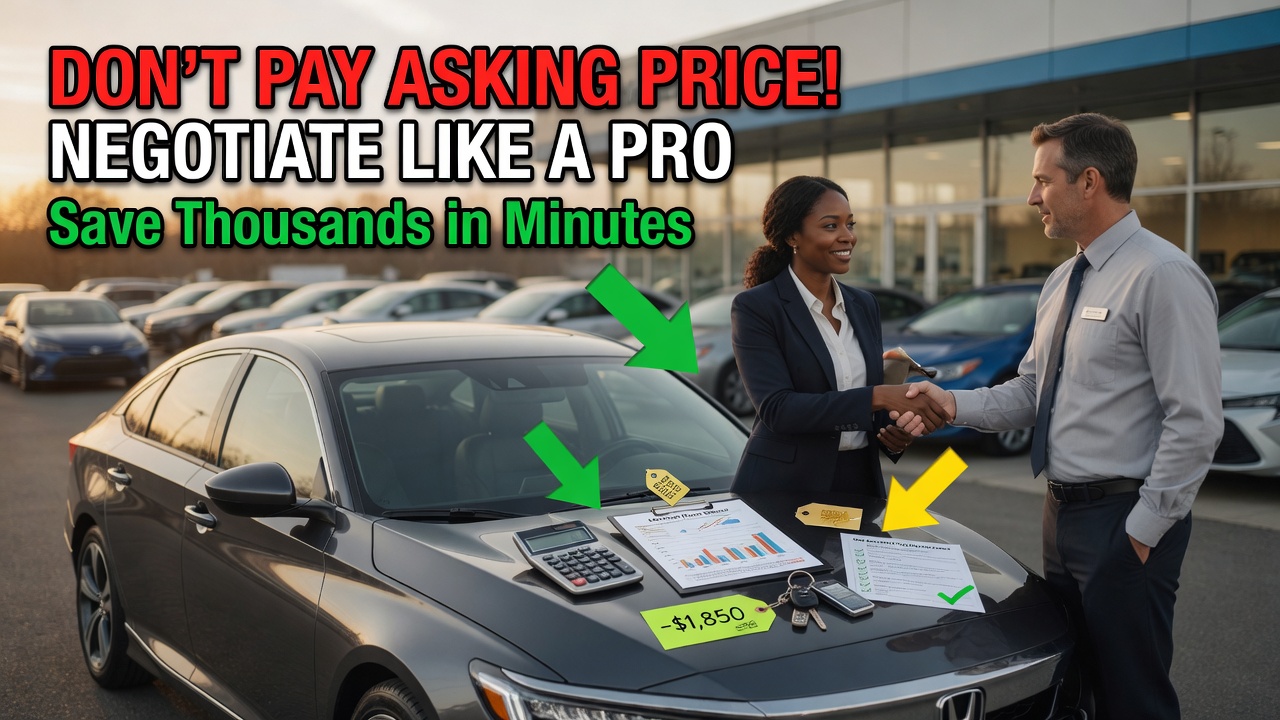
How to Negotiate the Price of a Used Car Like a Pro
Negotiation Isn’t a Personality Trait, It’s a Preparation Habit
A lot of buyers assume negotiation success comes down to being naturally assertive or comfortable with confrontation. In practice, the buyers who consistently get better deals aren’t necessarily the boldest personalities in the room – they’re the most prepared. Specific data beats generic haggling every time, and preparation is something anyone can do regardless of temperament.
Table of Contents
- Preparing Before You Even Start Talking
- Setting Your Walk-Away Number
- Using Comparable Sales Data
- Using Inspection Findings as Leverage
- Making Your Opening Offer
- Handling Pushback and Counteroffers
- Negotiating Beyond Just Price
- Recognizing When to Walk Away
- Expert Tips
- Common Mistakes
- Frequently Asked Questions
Preparing Before You Even Start Talking
Before you say a single word about price, you should already know three things: what comparable vehicles are actually selling for, what condition-specific issues an inspection has revealed, and what your absolute ceiling is regardless of how the conversation goes. Buyers who walk in with this preparation negotiate from a position of genuine confidence rather than guesswork, and sellers can generally tell the difference.
Setting Your Walk-Away Number
Decide on your maximum price before you’re in the room or on the phone, not during the conversation itself, when emotional momentum can push you past what you originally intended to spend. Write it down beforehand if that helps you stay disciplined. A firm, pre-decided walk-away number is one of the strongest tools in any negotiation, because it removes the pressure of deciding under real-time social pressure.
Using Comparable Sales Data
A proper car valuation guide based on actual recent sales, not just competing asking prices, gives you a specific, defensible number to anchor your offer around. Mentioning that “similar vehicles in this condition have sold for X” is far more persuasive than simply asking a seller to “do better,” since it demonstrates you’ve done real research rather than guessing.
Using Inspection Findings as Leverage
Specific, documented issues from a pre-purchase inspection – worn brakes, tires needing replacement soon, a minor fluid leak – give you concrete, itemized reasons for a price adjustment. Sellers tend to respond far better to “the inspection found the brakes need replacing soon, which typically costs around this much” than to a vague request for a discount with no stated reason behind it.
Making Your Opening Offer
Your opening offer should be reasonable enough to be taken seriously, typically somewhat below your actual target price to leave room for a counteroffer, but not so low that it damages the seller’s willingness to negotiate in good faith. An offer that’s obviously disconnected from the vehicle’s real market value can end a negotiation before it really starts, rather than opening a productive back-and-forth.
Handling Pushback and Counteroffers
When a seller counters your offer, respond with the same specific reasoning you started with, rather than simply repeating your number more firmly. If they push back on a specific inspection finding, be ready to explain the typical repair cost or cite the comparable sales data again. Staying calm and factual throughout tends to move negotiations forward more productively than escalating tone or pressure.
Negotiating Beyond Just Price
Price isn’t the only negotiable element. Depending on the situation, you might negotiate who pays for a specific repair before sale, whether certain accessories or a spare key are included, or the timeline for pickup and paperwork. Especially with a firm seller on price, negotiating these additional terms can still improve the overall value of the deal without requiring the seller to move on the number itself.
Recognizing When to Walk Away
If a seller won’t move meaningfully from a price well above fair market value, or won’t address serious inspection findings in any way, walking away is a legitimate and often smart outcome, not a failure. There is rarely only one car that will work for you, and being willing to leave a specific negotiation is what gives your walk-away number real weight in the first place.
Expert Tips
- Stay calm and matter-of-fact throughout – negotiations grounded in specifics tend to go better than ones driven by tension or pressure.
- Let silence do some of the work; after stating your offer and reasoning, resist the urge to immediately fill the pause.
- Negotiate in person or by phone when possible, since tone and rapport are harder to convey over text messages alone.
- Always have your pre-approved financing rate ready to negotiate separately from the vehicle price itself.
Common Mistakes
- Negotiating without comparable sales data, relying on a vague sense of what feels fair.
- Not having a firm walk-away number decided before the conversation starts.
- Getting emotionally attached to one specific car, weakening your ability to walk away.
- Making an unreasonably low opening offer that shuts down productive negotiation entirely.
- Focusing only on price and missing opportunities to negotiate repairs, included extras, or timeline.
Frequently Asked Questions
How much can I typically negotiate off a used car’s asking price?
It varies significantly based on the vehicle, how long it’s been listed, and local market conditions – there’s no universal percentage, which is why comparable sales data matters more than a rule of thumb.
Should I mention I’ve been pre-approved for financing during negotiation?
It can be useful leverage, particularly with a dealer, since it signals you’re a serious, ready-to-close buyer with your own benchmark for comparison.
Is it rude to negotiate hard with a private seller?
Not if it’s grounded in specific, respectful reasoning like comparable sales or inspection findings. Vague, aggressive lowballing without justification is what tends to feel disrespectful.
What if the seller won’t negotiate at all?
Some sellers, particularly with high-demand vehicles, genuinely won’t move on price. In that case, decide whether the asking price still fits your budget or whether it’s time to look elsewhere.
Should I negotiate in person or over text?
In person or by phone generally works better for substantive negotiation, since tone and rapport are harder to establish through text alone.
Can I still negotiate after an inspection reveals issues?
Yes, this is one of the most effective times to negotiate, since you now have specific, documented reasons to support a price adjustment.
What’s a reasonable opening offer?
Somewhat below your target price, grounded in comparable sales data, so there’s room for a counteroffer without the initial number seeming disconnected from market reality.
Is it okay to walk away and come back later?
Often yes, and it can even work in your favor, since sellers sometimes reconsider after a listing sits longer without other serious offers.
How do I know if I’m being too aggressive in negotiation?
If the seller stops engaging constructively or the conversation feels adversarial rather than collaborative, it may be worth recalibrating your approach toward more specific, less confrontational reasoning.
Can I negotiate add-ons like a full tank of gas or new floor mats?
Yes, especially if the seller is firm on price – these smaller extras can still improve the overall value of the deal without requiring a change to the main number.
Summary
Effective negotiation comes down to preparation: comparable sales data, specific inspection findings, and a firm walk-away number decided in advance. Confidence built on real information consistently outperforms aggressive haggling without substance behind it.
Final Thoughts
Negotiation doesn’t have to feel like a battle. Approached with genuine preparation and a calm, specific tone, it becomes a straightforward conversation about fair value – one that tends to leave both sides feeling reasonably satisfied with the outcome.
Ready to put these skills into practice? Browse used car listings on Car Hub, or create a free account to start comparing and negotiating with confidence.